Chapter 1
The 1AP…it’s more than a pressing exercise.
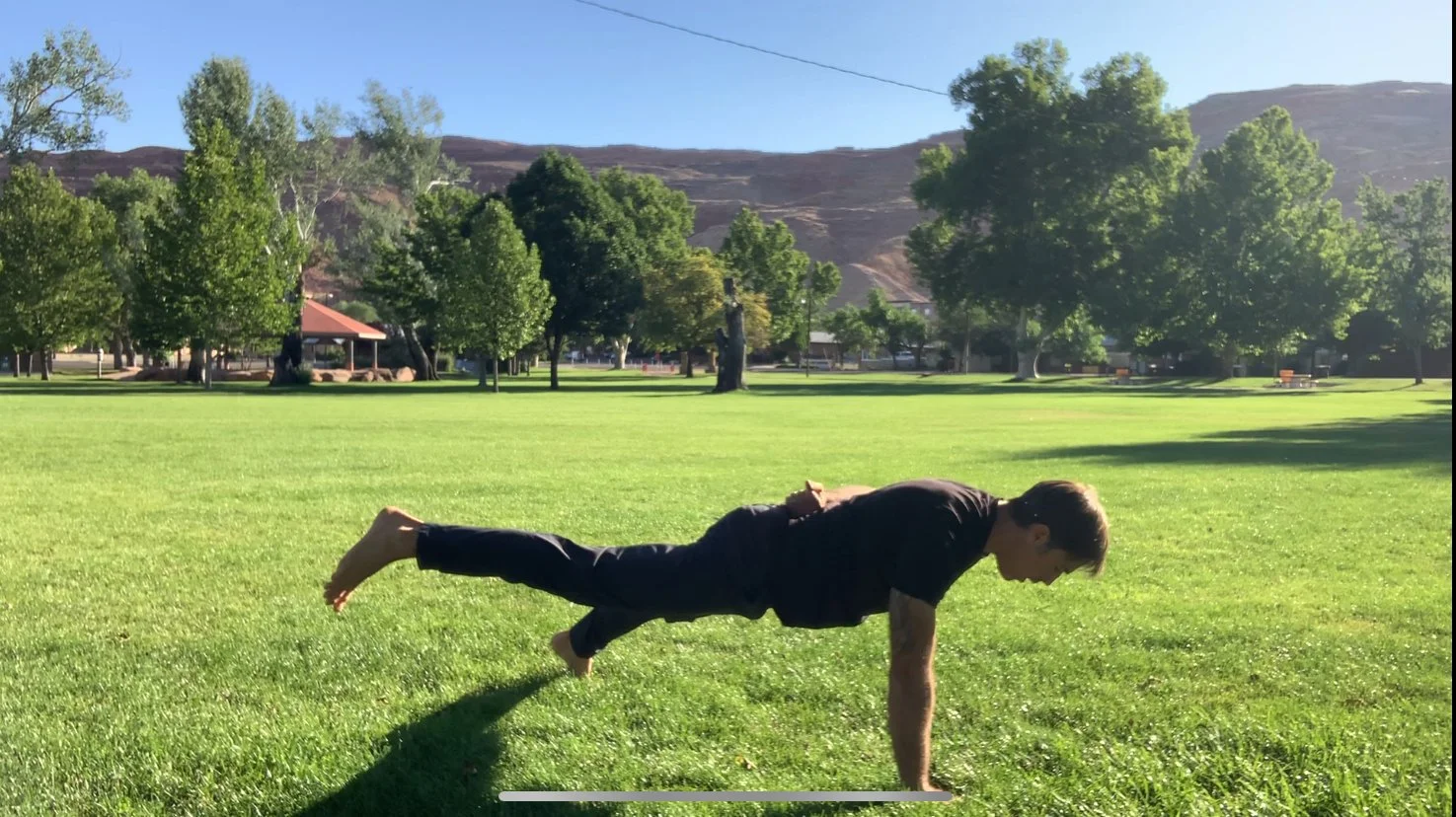
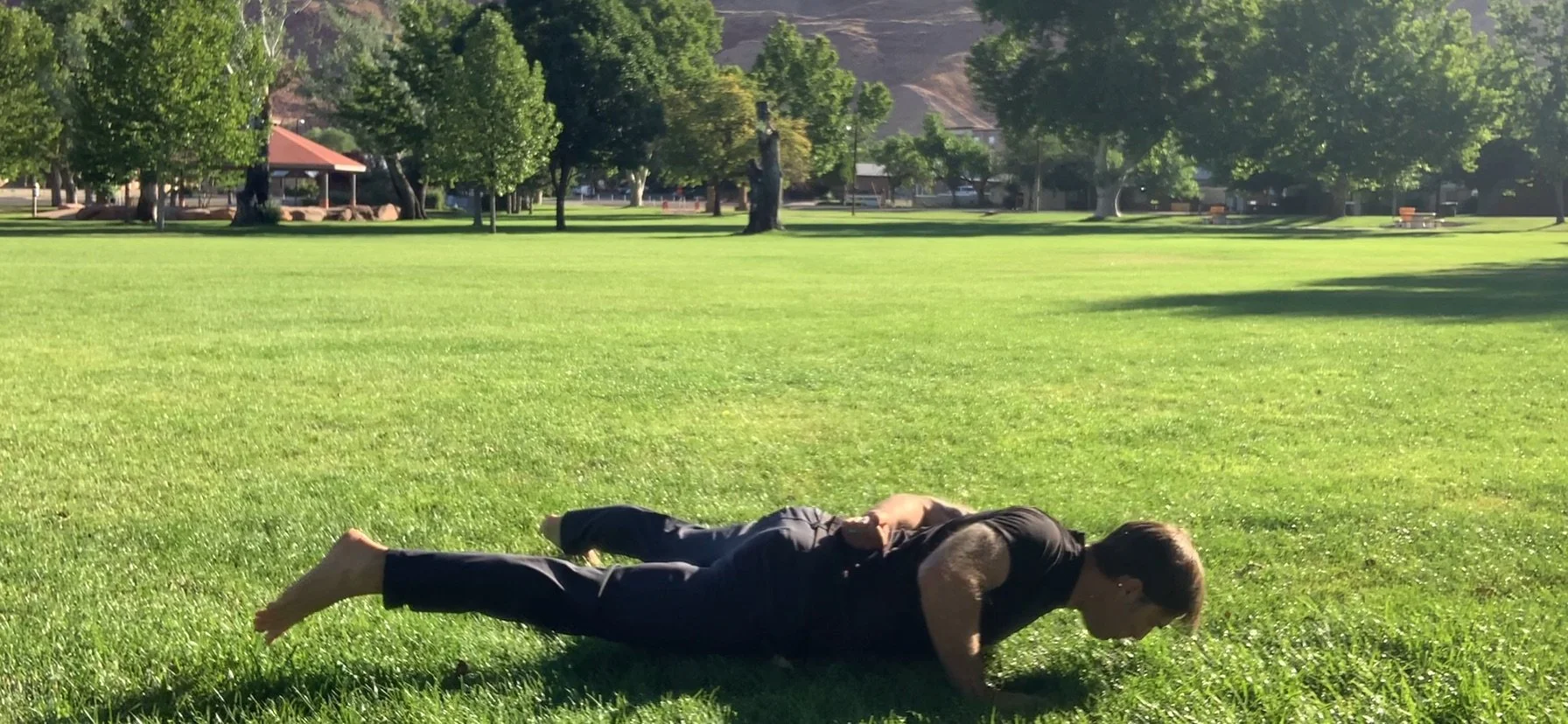
The One-Arm Push-up (1AP) and the One-Arm One-Leg Push-up (1A1LP) are humbling pressing lifts. Obviously more difficult than a regular Push-up, but the level of difficulty is so exponentially greater it will surprise you. The 1AP and 1A1LP are both horizontal pressing variations. They require zero equipment and they can be performed anywhere. They can be scaled in a variety of ways to find a progression that is appropriate for your strength and goals. Using a yoga block as a target you can easily find a range of motion that is appropriate for training in a variety of rep ranges, and of course to the floor is the natural goal. When you are proficient with multiple sets of 3-5 reps, taking a leg away will be an appropriate next progression. You could even take your 1AP or 1A1LP to a deficit, but getting to that point would be quite a journey and make you specialize in the 1AP or 1A1LP, but that is an option. I think every intermediate lifter should learn the 1AP and every advanced lifter should have at least 1 strong rep of the 1AP in their back pocket at all times. Maybe not on both sides, but at least on their stronger side.
The 1AP is a leg exercise?
What is so humbling about this lift? It is not the pressing/pushing aspect of the 1AP, it is the tension that is required everywhere else in your body. To be successful in the lift you need to create a strong stable base with the legs and trunk to press from. It is the shooting of a cannon from a canoe analogy. Would you rather fire a cannon from a canoe or from a battleship? Obviously firing a cannon from a canoe should bring to mind a comical cartoon image of the gunman being launched backwards with his cannon and his canoe spinning in circles. You need a strong and stable base of support to press from, just like in a Kettlebell or Barbell Military Press. It is a lack of using the legs, hips, and abs that causes so many lifters to fail or contort during the execution of this lift. I have seen very strong men and women contort and crumble when attempting the 1AP and 1A1LP. I tell athletes to focus on the quads and the glutes, and that the 1AP and 1A1LP are leg exercises not pressing exercises. That cue usually raises an eyebrow and clearly puts the brain to work. “The 1AP is a leg exercise?”
A beautifully done 1AP or 1A1LP has very little or no rotation. The hips and the shoulders remain square to the ground on the down, through the transition, and in the press. Twisting or opening up is a bail out and not a real rep. The lower back should remain neutral.
The 1-Arm Push-up in bulletpoint instructions as an overview and a clear expectation to guide the steps from start to finish that lay ahead.
1-Arm Push-up
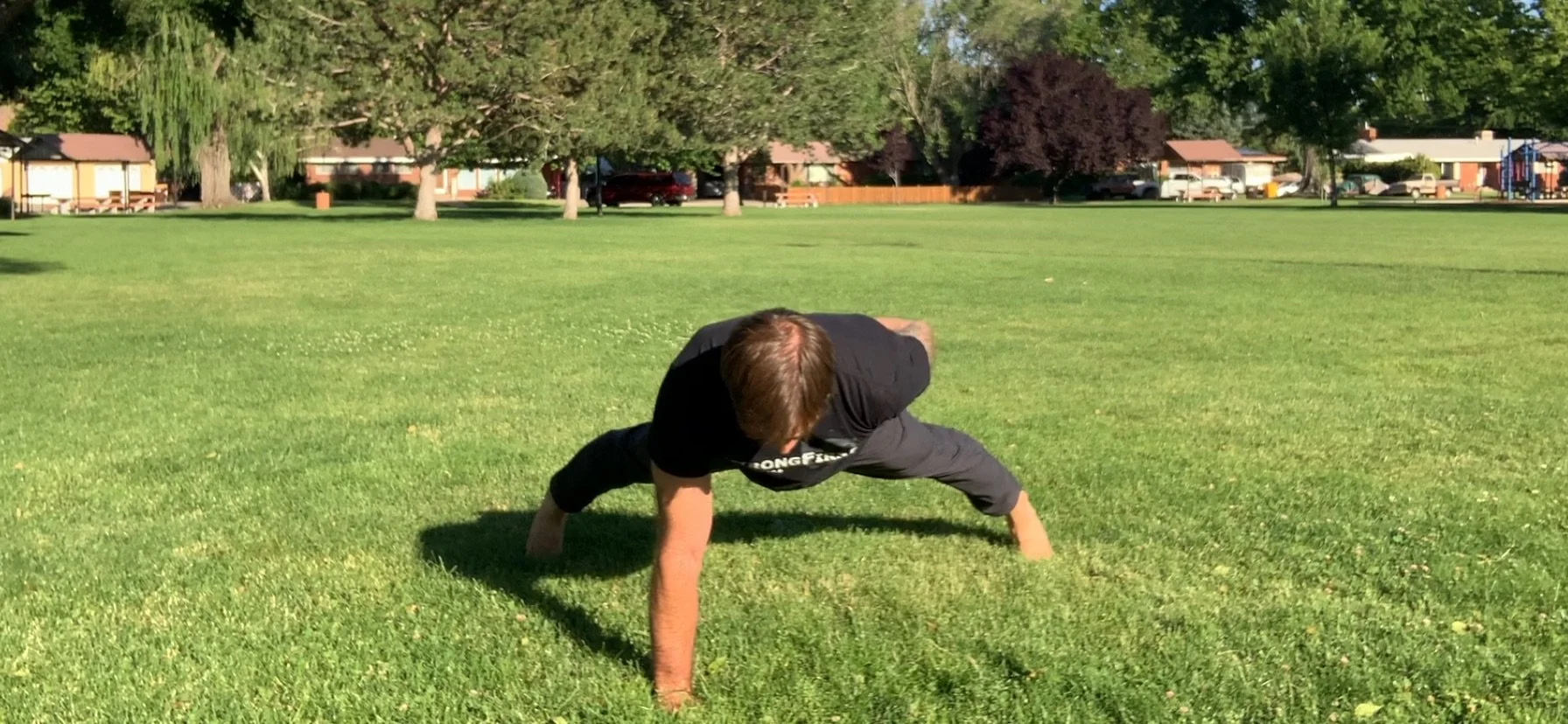
Setup with your hands under your shoulders and your feet together.
Step your feet wide into approximately double shoulder width
Position your body in a straight line from your ears to shoulders, to hips, to knees, to ankles.
Corkscrew your working hand into the floor and lace your non-working arm behind your lower back.
Take a breath in and create tension around this breath by bracing your quads, glutes, and abs.
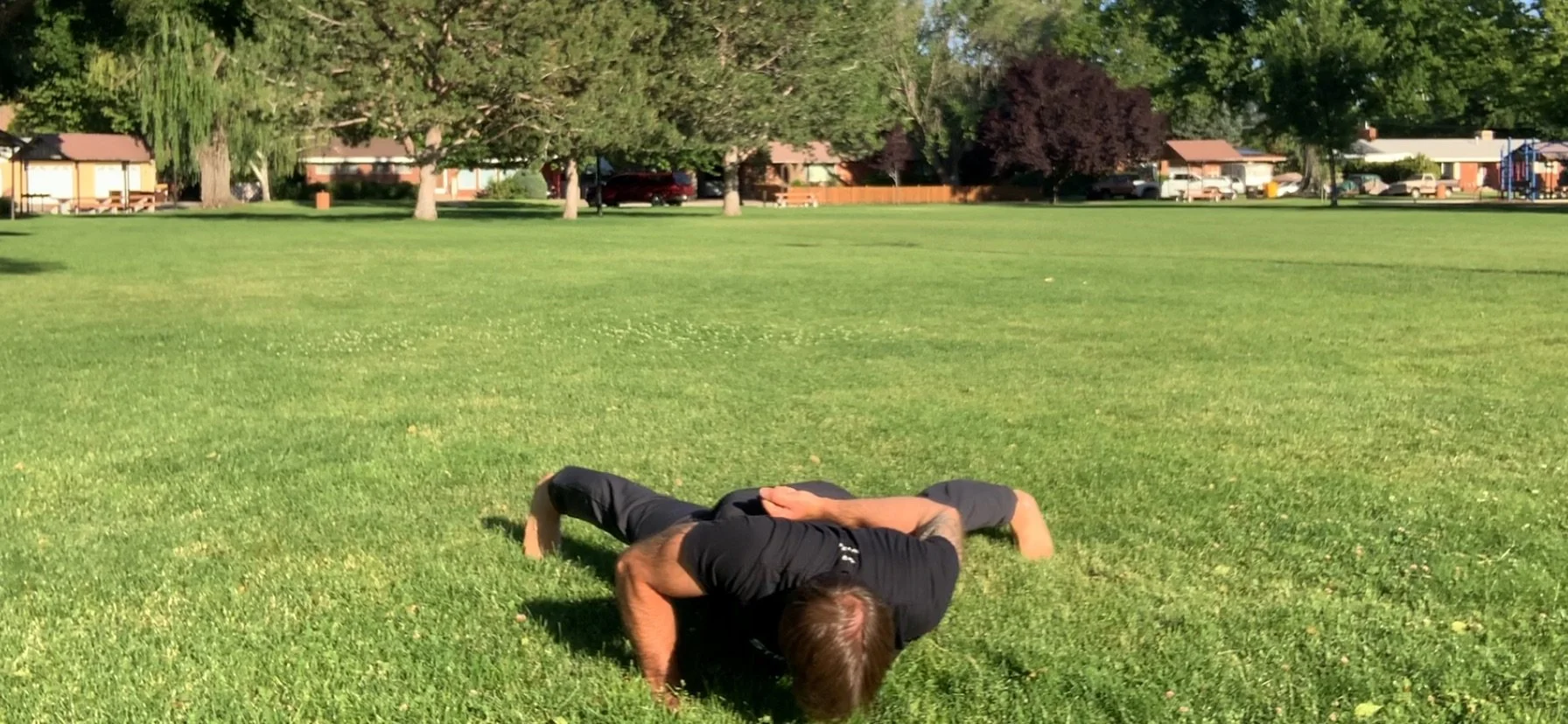
Holding this breath, pull yourself to the bottom. Grip the ground, bearing your weight through the heel of your hand. Maintain your tension and stay square to the ground with your hips and shoulders.
Hit your depth and press back to the top. Keep your working shoulder down out of your ear. Feel like you are pressing from your lats. Exhale as you get 2/3 of the way up to power you to the top.
Lockout the rep, pause to demonstrate balance and repeat for reps.
1-Arm 1-Leg Push-up (1A1LP)
Overview (Bulletpoints) as a clear expectation to guide the steps from start to finish that lay ahead. All of the concepts and drills in this guide can be used for the 1A1LP.
Setup with your hands under your shoulders and your feet together.
Step your feet wide into approximately double shoulder width
Position your body in a straight line from your ears to shoulders, to hips, to knees, to ankles.
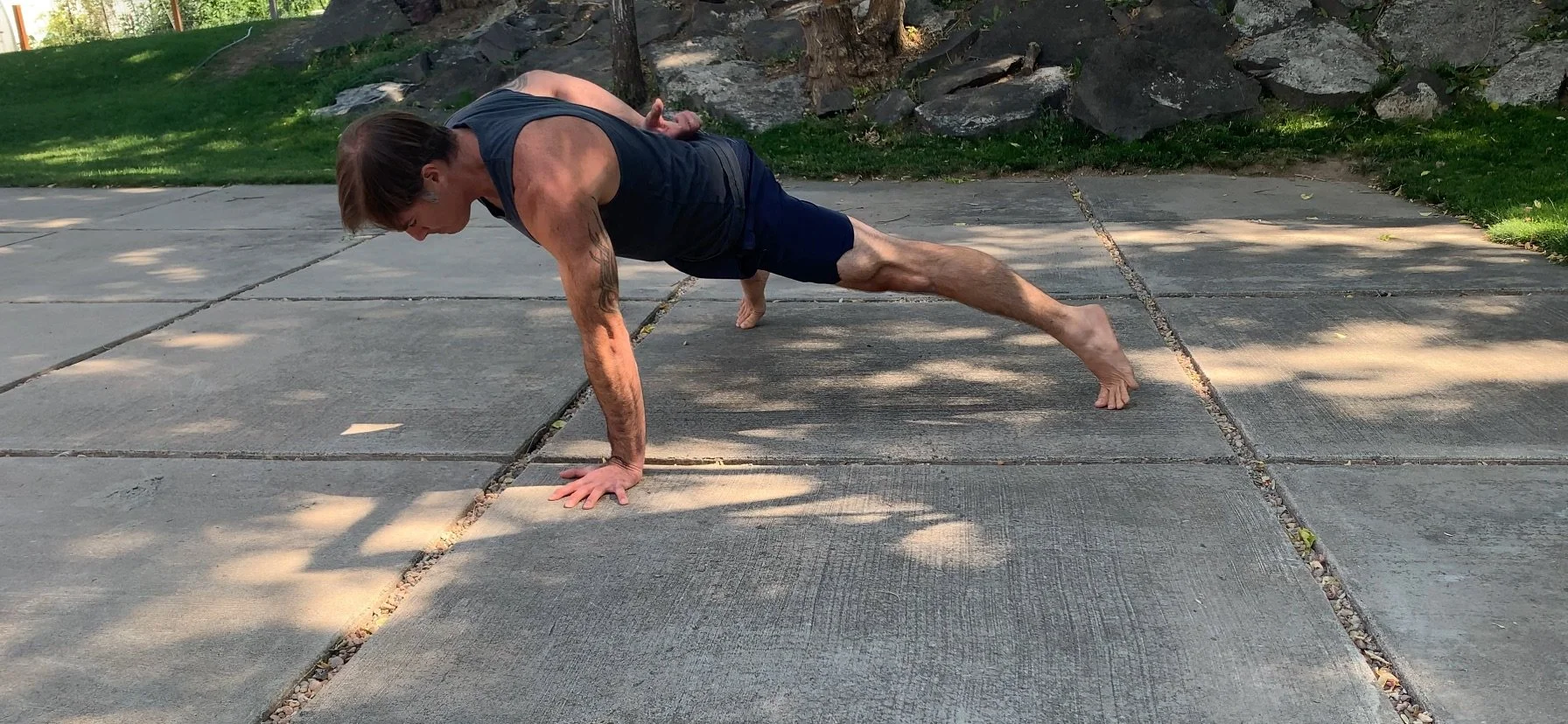
Corkscrew your working hand into the floor and place your non-working arm behind your lower back.
Lift the leg opposite your working hand. Do this by squeezing your glute. It is a small lift, perhaps only a couple inches. Keep this leg braced as tight as the stance leg.
Take a breath in and create tension around this breath by bracing your quads, glutes, and abs.
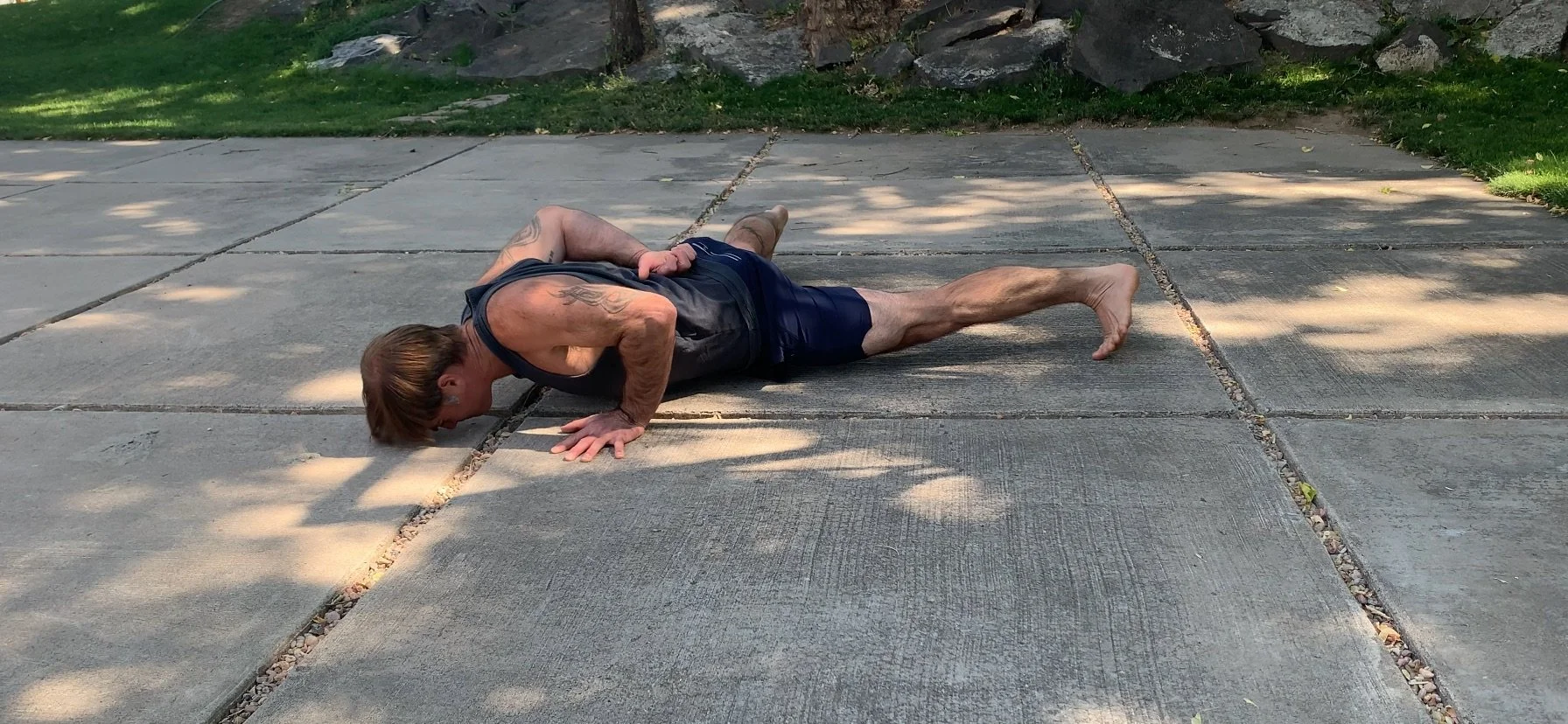
Holding this breath, pull yourself to the bottom. Grip the ground, bearing your weight through the heel of your hand. Maintain your tension and stay square to the ground with your hips and shoulders.
Hit your depth and press back to the top. Keep your working shoulder down out of your ear. Feel like you are pressing from your lats. Exhale as you get 2/3 of the way up to power you to the top.
Lockout the rep, pause to demonstrate balance and repeat for reps.
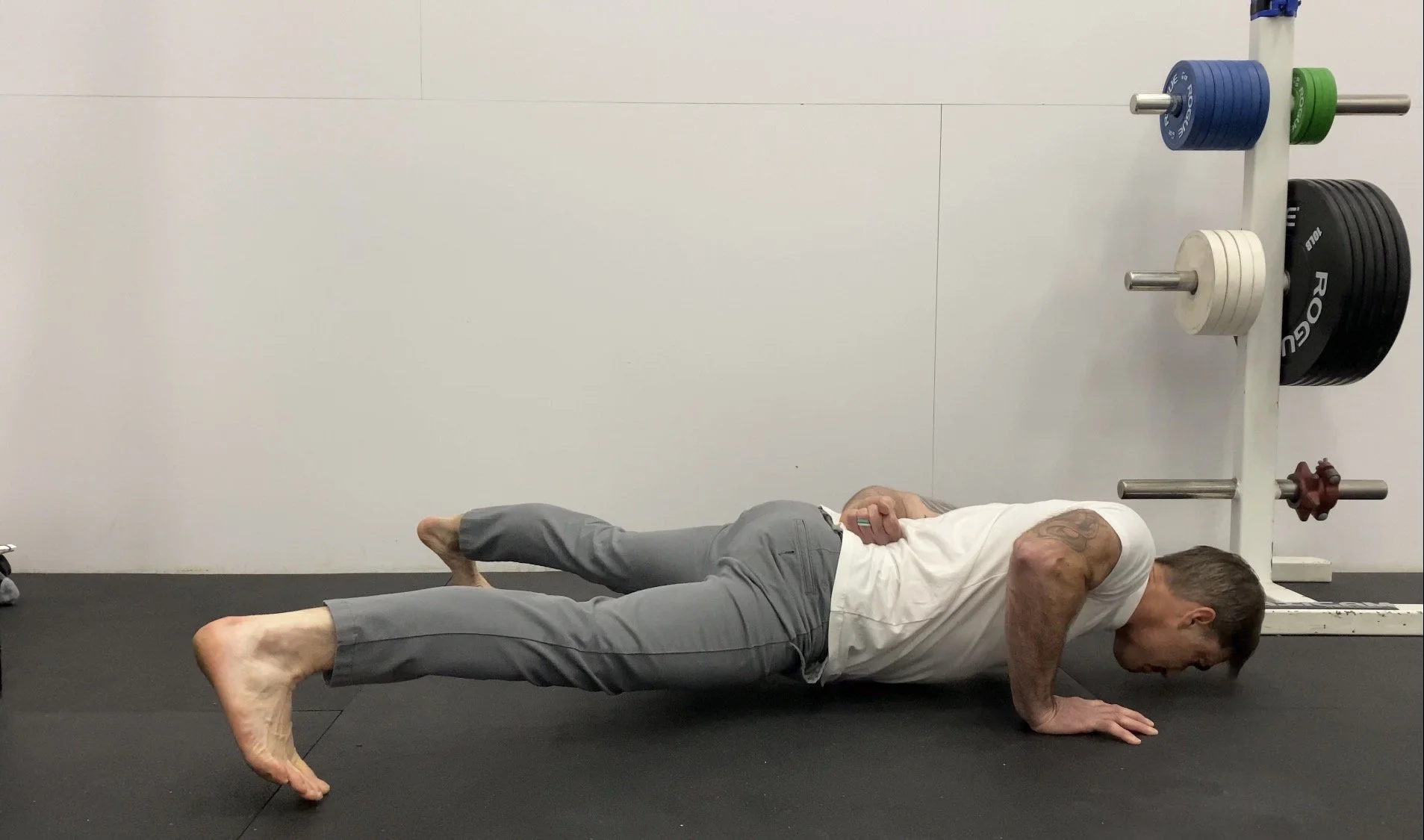
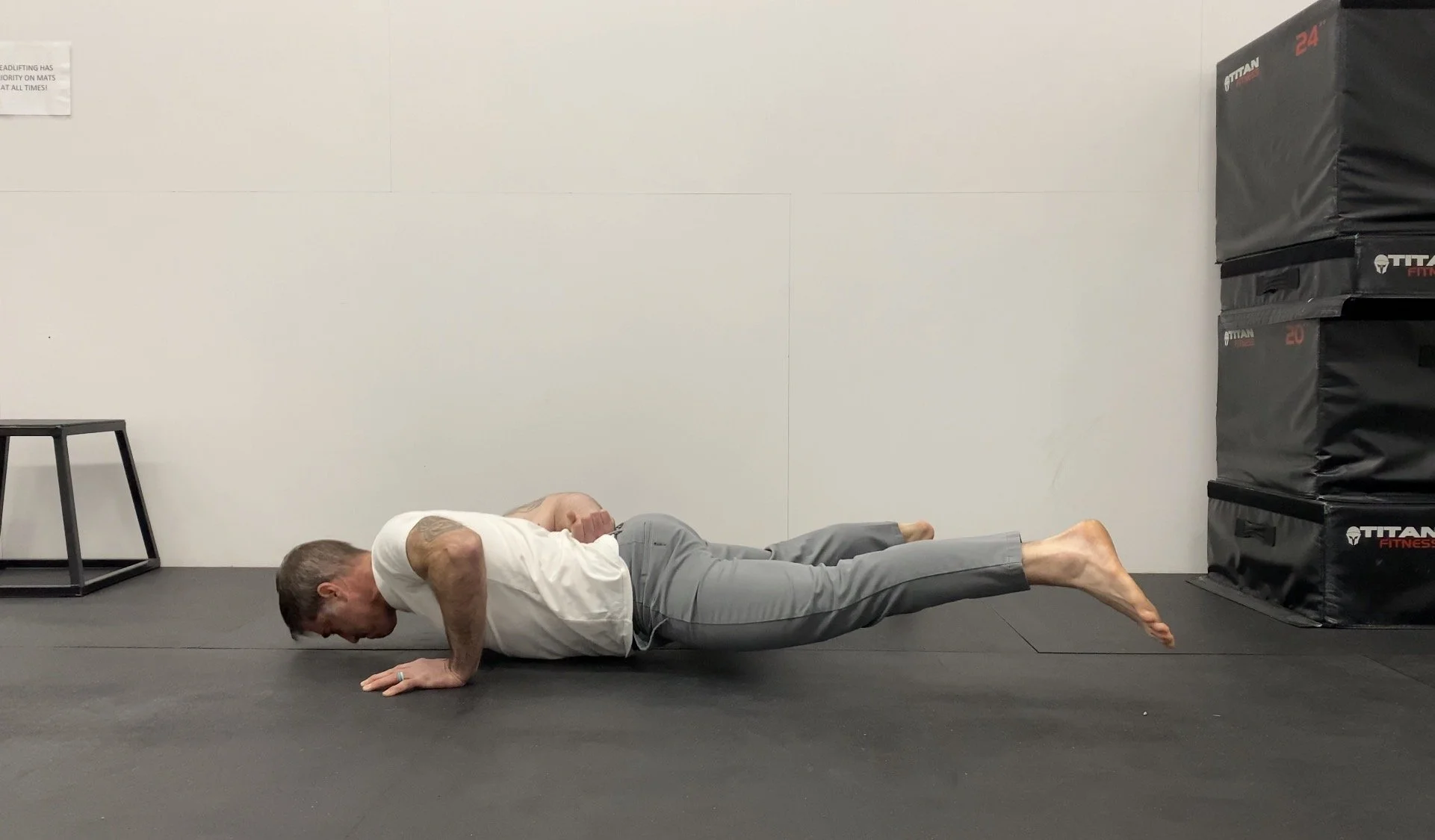
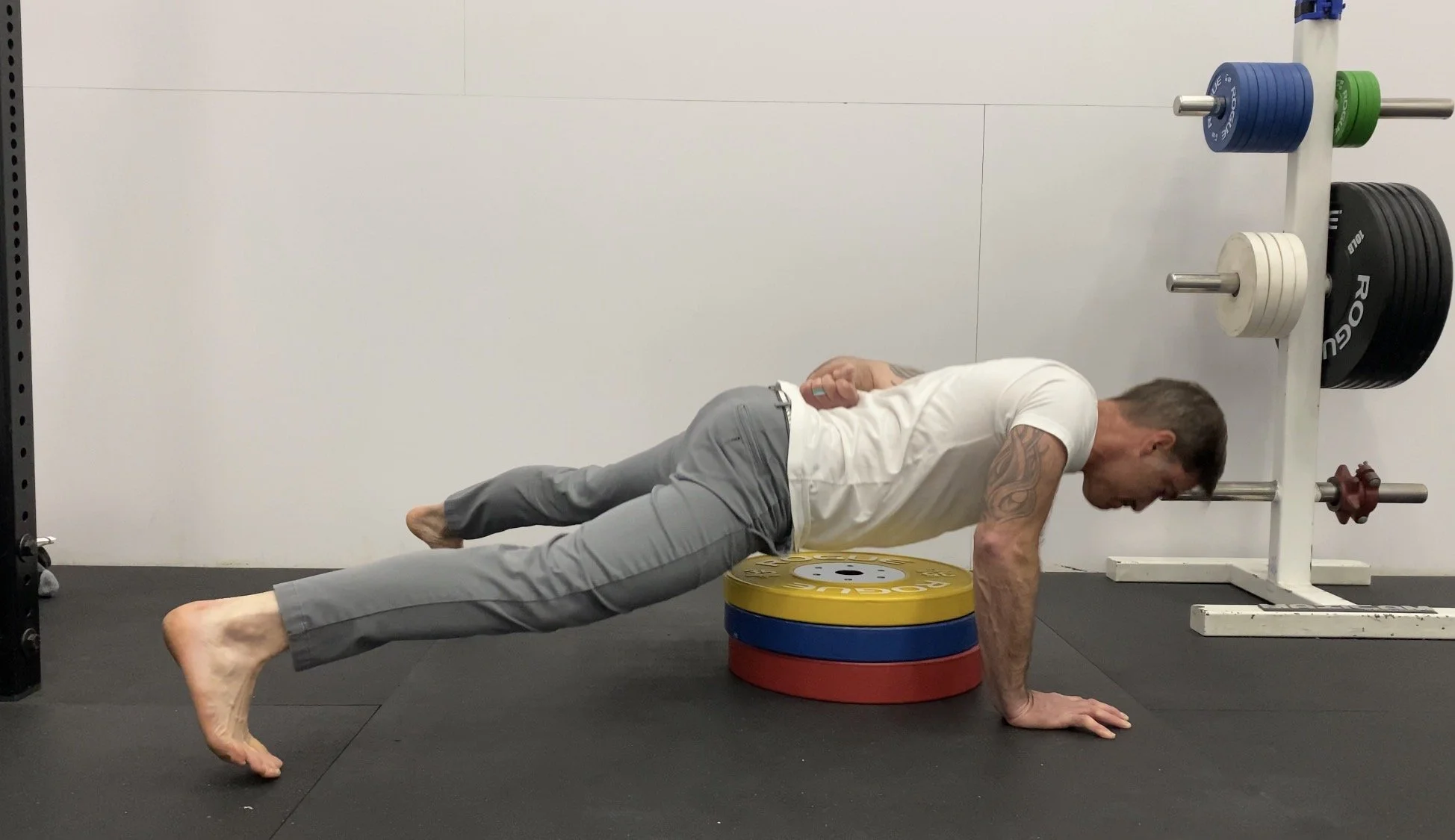
The cross-body connection in the 1-Arm[1-Leg] Push-up.
In both variations you are connecting your opposite shoulder to your opposite hip/leg. The rotational forces that are resisted in a 1A[1L]P require far more strength than the actual pressing action of the lift. The difficulty of the press is amplified by the linkage that you have to create through your body to produce a solid structure to move with your pressing arm. I would argue that the press is the easy part. The bracing and tension is the real skill. If you are a runner, throwing athlete, an athlete that swings a club, bat, or racquet; or if you practice a martial art (boxing, muay thai, kung fu, jui jitsu, etc.); the 1A[1L]P will bring higher levels of performance to your sport/activity.
At its highest expression the 1-Arm 1-Leg Push-up is a very difficult lift. It is strong medicine and best trained for Singles, Doubles, and an occasional Triple. However, there are many progressions that can be appropriate for the current strength and skill you possess.